
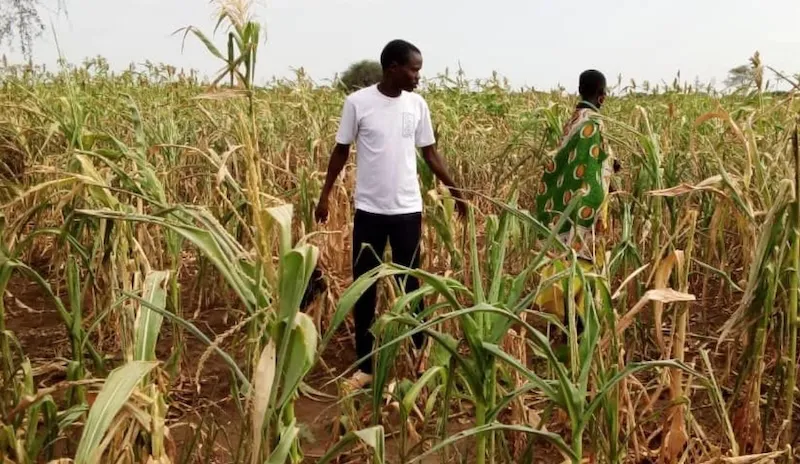
Kotido District authorities have confirmed that at least 15 people have died from suspected hunger-related illnesses after a prolonged drought devastated crops, leaving tens of thousands of households without enough food.
The deaths have been reported since June across the sub-counties of Napumpum, Longaroe, Maru and Rengen as the food crisis worsens.
The district, which has a population of about 219,700 people, estimates that more than 45,600 households have been severely affected by the prolonged dry spell.
Kotido Chief Administrative Officer Emmanuel Oyuku said reports from local authorities indicate that at least 15 people have succumbed to hunger-related causes.
“The figures are alarming, and this calls for urgent action to address and fight the hunger crisis,” Oyuku said.
He urged communities to improve household food storage, saying many families sell most of their harvest immediately after the growing season, leaving them vulnerable when drought strikes.
According to Oyuku, Kotido has recorded relatively good harvests in recent years, but many farmers sold their produce believing that government or humanitarian organisations would provide relief whenever food shortages occurred.
“The mindset must change. Communities should keep food reserves instead of selling everything and relying on well-wishers during periods of hunger,” he said.
District Chairperson Paul Lote Komol described the situation as a humanitarian emergency and appealed to the Office of the Prime Minister (OPM) to urgently deliver food aid before more lives are lost.
“The communities can no longer fend for themselves and deaths linked to hunger have already started emerging. We appeal to the Office of the Prime Minister to intervene before the situation gets out of hand,” Lote said.
He said the drought had destroyed nearly all food crops, leaving little prospect for a second planting season because many households had already exhausted their resources.
While district leaders encouraged families to retain part of their harvest, farmers said selling crops remains their primary source of income.
Robert Iriama, a farmer from Panyangara Sub-county, said crop sales help families pay school fees, meet medical bills and cover other household expenses.
“You cannot stop someone from selling food after harvest because we also need money to fight poverty. The challenge is that we have very few alternative sources of income,” he said.
Another farmer, John Lokiru, said many households rely on selling sorghum to buy other food items and essential household goods, insisting that the crisis was driven mainly by drought rather than poor farming practices.
Rengen Sub-county LC III Chairperson Elijah Lobur said food shortages were increasingly affecting vulnerable groups, particularly older people and malnourished children.
“Everyone is vulnerable, but there are families that have nowhere to turn. Some remain in their homes until they die,” he said.
District Agricultural Officer Robert Kennedy Okuda said rainfall during both the March-May season and the current growing season was well below normal, leading to widespread crop failure.
District assessments indicate that about 87% of crops were lost, resulting in estimated economic losses of about Shs56bn.
Okuda said the crisis highlighted the need for greater investment in irrigation and water for production instead of depending almost entirely on increasingly unpredictable rainfall.
Resident District Commissioner Charles Ichogor said the hunger situation had also disrupted the implementation of government programmes, including the Parish Development Model (PDM).
“When we visit communities to monitor PDM, people tell us they are hungry. It becomes difficult to discuss anything else,” he said.
Ichogor added that communities also need greater awareness of climate change adaptation as extreme weather events become more frequent.
The Office of the Prime Minister says it has strengthened disaster preparedness across the Karamoja sub-region by training district disaster management committees to conduct rapid assessments and improve emergency response.
Senior Disaster Management Officer Titas Muhofa said the ministry is decentralising disaster response by establishing regional offices in Soroti, Gulu, Hoima and Mbarara to improve response times during emergencies.
The hunger crisis comes as the wider Karamoja sub-region continues to experience severe food insecurity following prolonged drought.
According to the latest Integrated Food Security Phase Classification (IPC) analysis conducted between March and April 2026, about 32% of Karamoja’s population was classified under IPC Phase 3 (Crisis) by May 2026, while around 41,000 people, representing 3% of the population, were in IPC Phase 4 (Emergency).
Officials say immediate food assistance is needed to prevent further deaths, while stressing that long-term solutions will depend on investment in irrigation, climate-resilient agriculture and improved household food storage.
Related posts:
- Uganda Police Arrest Five Over Kidnap and Murder of Six-Year-Old Boy in Bugiri
- 31-Year-Old-Man arrested in Yumbe over defilement of 1-year-old niece
- “I have killed her”: Family Recall Chilling Call After Ibanda Killings
- Kenyan High Commissioner Apologizes to General Muhoozi Over Controversial Article
