
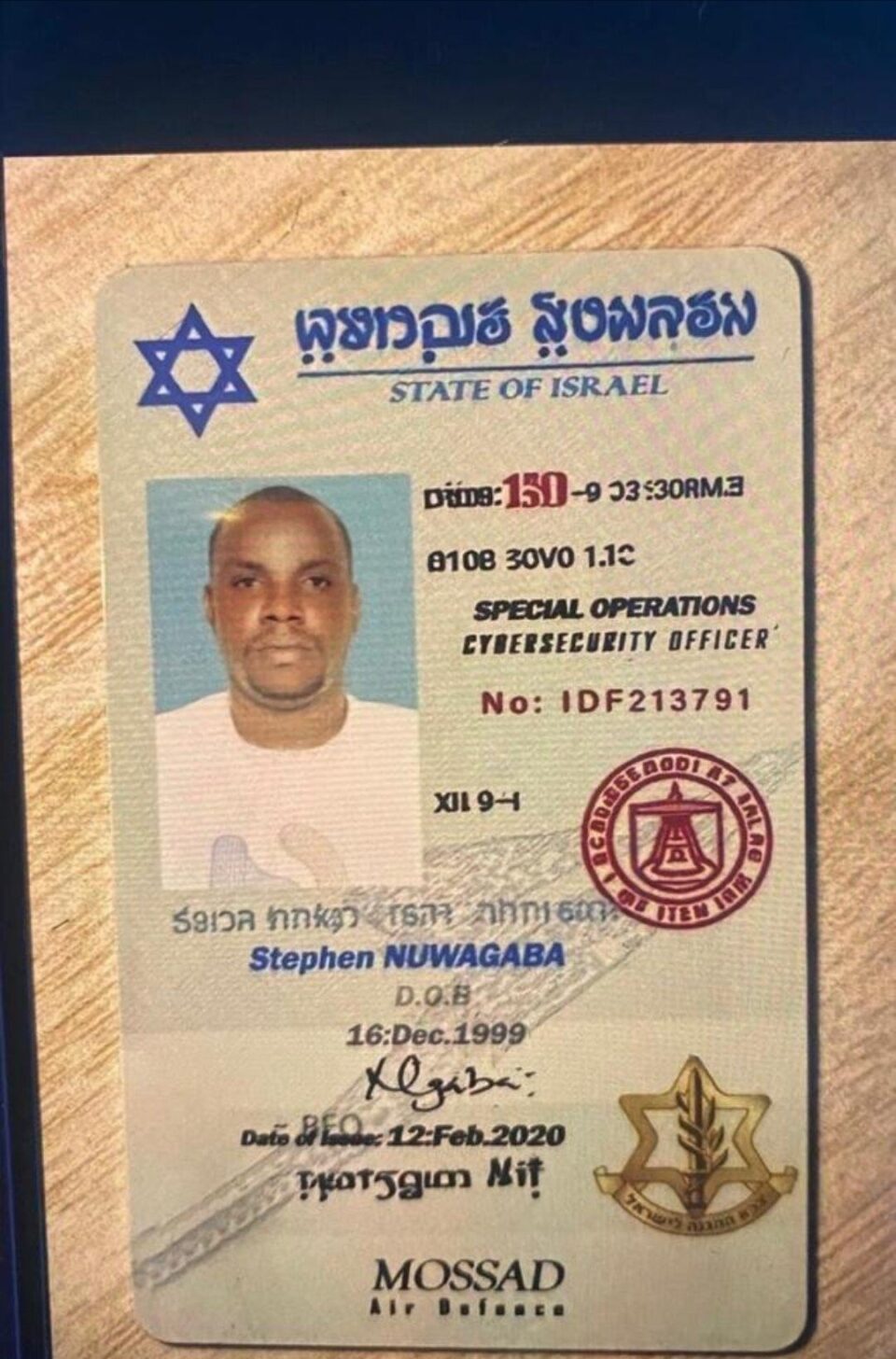
The Independent’s exposé on Stephen Nuwagaba reads on its surface as a straightforward morality tale a fraudster with fake credentials and forged WhatsApp chats talked his way into State House, terrorised senior security officers and extorted money from the vulnerable.
It is a good story and probably a true one in its particulars but it is worth asking a harder question than how did this man get away with it , why is this story being told now by this Independent Magazine in this way and what it reveals about a much older fight inside Uganda’s security agencies.
Look at what the article actually does, beneath the anecdotes. It discredits one channel of intelligence to the president ‘s informal personality-driven, unaccountable while quietly elevating another; the formal services, ISO, CMI the officers named as Nuwagaba’s targets.
That is not a neutral inventory of one con man’s sins. It is an argument for recentralising the gathering and processing of intelligence inside the established bureaucracy at the direct expense of the informal freelance channels the president has always kept running alongside it.
This is not a new genre for the paper. The 2017 cover story on the Tumukunde-ISO rivalry followed an identical template. Rival camps feeding the president competing intelligence each claiming the other side is lying with the president caught in the middle trying to adjudicate. The names change, the structure of the fight does not.
None of this proves the Nuwagaba allegations are false. But it should make readers pause before accepting the story as disinterested reporting rather than as one side’s opening move in an internal contest over who gets to define reality for the president.
The tell is in what didn’t happen.The most revealing part of the story is not what it alleges, but what it fails to explain.
The article itself says Nuwagaba’s claims typically take an hour to disprove. If that is true and if his conduct is as reckless and well-documented as described impersonating a brigadier general, fabricating WhatsApp evidence against serving officers, extorting an Assistant Inspector General of Police, then the puzzle is not how he got in but how he has stayed. Why does a man widely regarded inside the security establishment as a fabricator reportedly still live inside Nakasero State Lodge move around with SFC bodyguards and drive vehicles bearing State House plates?
And there is a more pointed question still. Gen Muhoozi Kainerugaba, as Chief of Defence Forces commands the very military apparatus that would ordinarily move against a civilian impersonating a UPDF brigadier general and running forged intelligence against serving officers.
That apparatus has shown it can move quickly and publicly when the president signals displeasure. Elsewhere witness how fast the machinery around Anita Among’s finances escalated once Museveni raised it in a state house meeting.
The absence of comparable action against Nuwagaba despite years of reported damage to serving officers’ careers is the most telling fact in the entire story. Someone with more institutional weight than his accusers wants him left exactly where he is.
This is not really a mystery once you understand the logic Museveni has operated on since the bush war. His intelligence model was built for a small, personally vetted inner circle where deliberate redundancy several competing informal sources reporting on the same ground was the whole point not an oversight.
No single service was ever allowed to become the sole gatekeeper of what the president knows because a monopoly on his information is a monopoly on access to him and by extension a lever against him.
That design worked when the NRM’s circle of trusted actors was small and the state was young. It scales badly onto a country of this size with an economy, a population and a security establishment this large and this factionalised.
But abandoning it would mean trusting one institutional pipeline over his own long-standing instincts about how power should be checked something he has given no sign of being willing to do.
Seen this way, a freelance operator with invented credentials is perversely easier for the president to live with than a formal service he cannot just fire. Nuwagaba can be disowned the moment he becomes inconvenient but informal services cannot be disowned.
It is entirely possible the simpler explanation is the correct one: that this is exactly what it appears to be, an unaccountable con man who exploited real gaps in an informal system and that the story’s timing reflects nothing more than sources finally being willing to talk.
Both readings are consistent with what has been publicly reported, neither can be confirmed without knowing who briefed Mwenda and why now.
What should trouble Ugandans either way is the same thing that troubled Gen. Salim Saleh when he first met Nuwagaba. An intelligence architecture built for a liberation movement is now running a modern state and the seams are showing. Whether Nuwagaba is a lone fraudster or a proxy in someone else’s turf war the fact that either story is plausible is itself the indictment.
Related posts:
- Kampala’s Real Crisis: When Ministers Fail, the City Bleeds
- The Alarming Genocidal Rhetoric of Benjamin Bol Mel: A Threat to Peace in South Sudan
- Urgent Appeal: Release and Reinstate Dr. Riek Machar as Vice President to Save South Sudan’s Fragile Peace
- Museveni’s Poverty Eradication Programs: Handouts, Hype and Hollow Promises?
